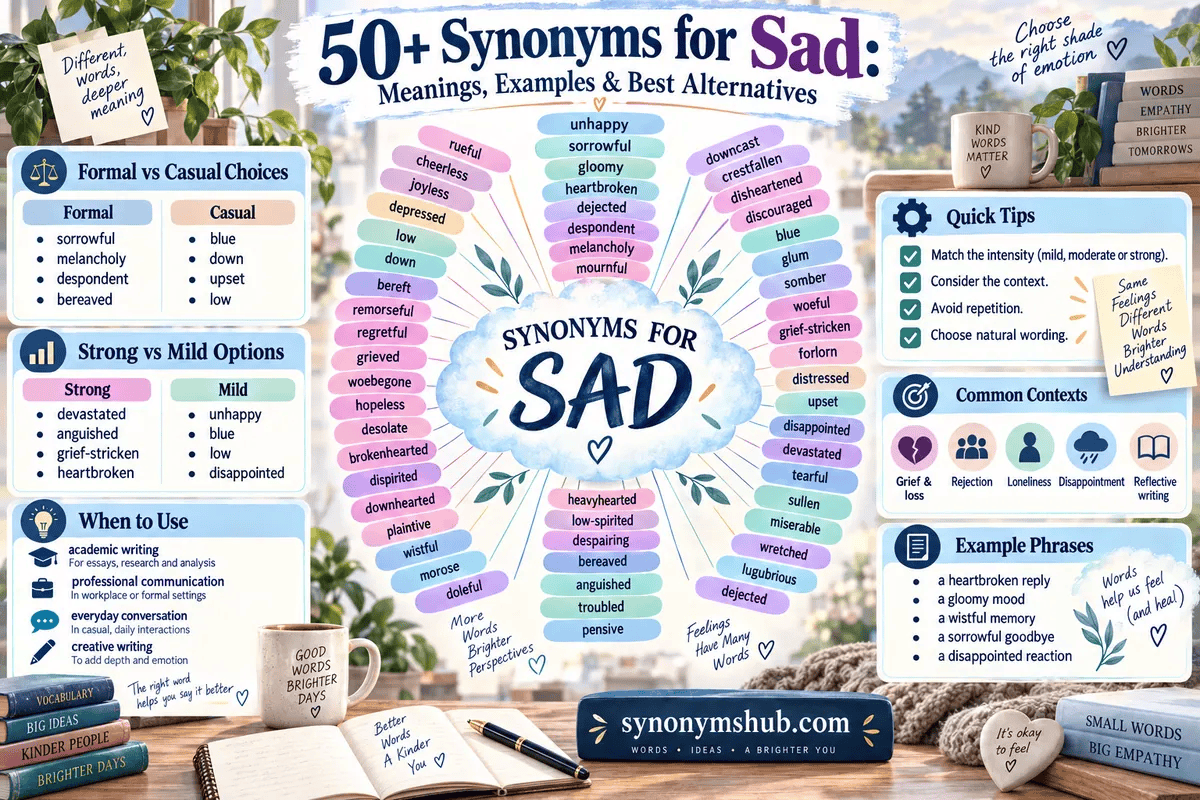
Sadness does not always feel alike. You can be upset because something unexpected happened, right? Sometimes, you feel like an absolute failure or are heartbroken when someone walks out of your life, or you feel low even when you haven’t had a hard day. Even though these feelings are quite different from each other, the expression “sad” frequently gets thrown around to describe them all, even when it does not always cover what you mean.
That is where Synonyms for Sad come in handy. Using a more specific word can tell the reader if it is departure sadness, nostalgic sadness, painful sadness, lost hope, sad regret, or grieving. Therefore, choosing the right option can make a sentence not only more complex but also natural and emotionally authentic.
Your mission is not to substitute “sad” whenever it appears. Rather, choose one word for its meaning that is appropriate to the individual, context, and degree of emotion you wish to represent.
What Do the Synonyms for Sad Actually Mean?
Sad is a generic emotional word, right? It is typically associated with negativity, heartbreak, sadness, sorrow, or a lack of joy. But the feeling can be somewhere between just a little disheartening and sheer agony.
For example:
The trip got canceled; it made her sad.
At this juncture, disappointed may be a better term to use.
Now consider:
“He felt sad after losing someone he loved.”
In that case, words like grief-stricken, bereaved, or heartbroken are loaded with more emotion.
The Synonyms for Sad can describe:
- Mild unhappiness
- Disappointment
- Emotional pain
- Grief and loss
- Hopelessness
- Loneliness
- Regret
- Reflective sadness
- A dark or serious mood
When to Use Synonyms for Sad
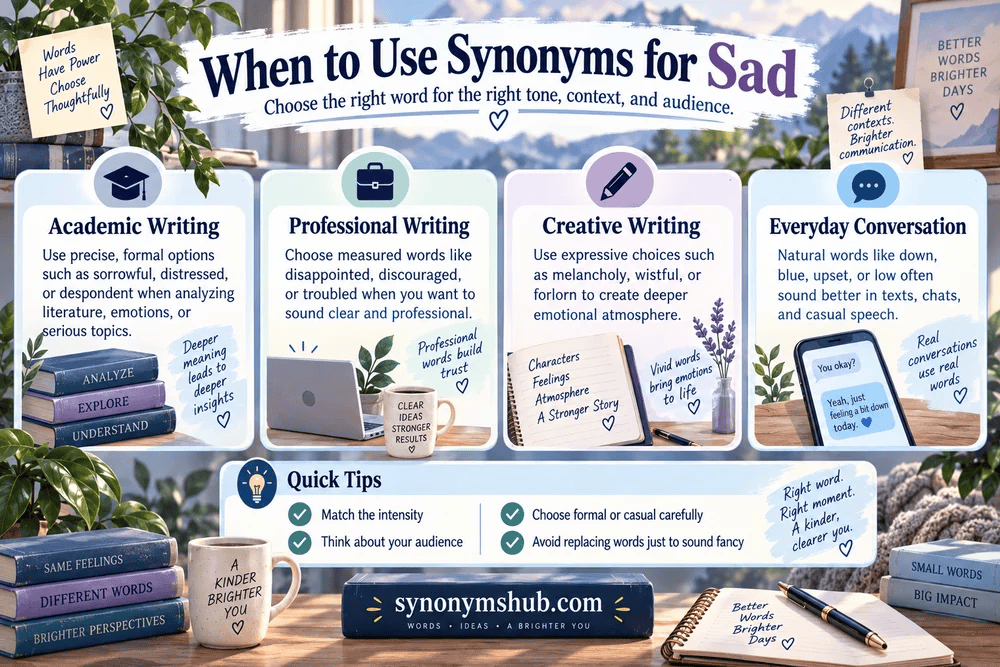
A stronger vocabulary helps when “sad” feels too general. However, the replacement should fit the context rather than sound more impressive.
Synonyms for Sad can be useful in:
If you are talking about emotions, literature, psychology, and social experience, using different formal variations of sad in everyday writing. Yeah, these include words such as sorrowful, distressed, or despondent, which may help you convey your intent better.
The term disappointed, discouraged, or concerned feels like a much better fit than the emotionally charged words that might appear in reports and interpersonal communication in the workplace.
More evocative words like melancholy, forlorn, wistful, and anguished are used more often in fiction, poetry, storytelling, reviews, and personal essays.
Simple expressions like down, blue, upset, and low feel more natural in texts, conversations, or social media.
51+ Synonyms for Sad With Meanings, Examples & Best Alternatives
Here, the following synonyms for Sad are ordered by their rarity in the language. I try to organized from more common and informal options to more literary and intense ones. Hence, pay attention to the tone as well as the dictionary meaning before choosing one.
1. Unhappy
| Category |
Details |
| Meaning |
Feeling displeased, dissatisfied, or without happiness. |
| Tone |
Neutral and widely used. |
| Example |
She felt unhappy about how the meeting ended. |
| Explanation |
A broad alternative that works for many ordinary negative emotions. |
| Purpose |
Useful in everyday, professional, and descriptive writing. |
| Best Alternatives |
Sad, Displeased, Down, Miserable |
2. Sorrowful
| Category |
Details |
| Meaning |
Filled with deep sadness or sorrow. |
| Tone |
Emotional, serious, and slightly formal. |
| Example |
He gave a sorrowful look as the train pulled away. |
| Explanation |
Suggests a deeper and more heartfelt sadness than “unhappy.” |
| Purpose |
Best for grief, literature, emotional descriptions, and serious situations. |
| Best Alternatives |
Mournful, Grieved, Woeful, Heavyhearted |
3. Miserable
| Category |
Details |
| Meaning |
Extremely unhappy or emotionally uncomfortable. |
| Tone |
Strong and negative. |
| Example |
The constant arguments made him feel miserable. |
| Explanation |
Describes intense unhappiness that can feel difficult to escape. |
| Purpose |
Useful in personal, narrative, and emotional writing. |
| Best Alternatives |
Wretched, Unhappy, Despondent, Distressed |
4. Gloomy
| Category |
Details |
| Meaning |
Feeling pessimistic, low, or lacking cheerfulness. |
| Tone |
Negative but common. |
| Example |
She became gloomy after hearing the disappointing news. |
| Explanation |
Often describes both a person’s mood and a dark atmosphere. |
| Purpose |
Good for everyday descriptions, stories, and mood-setting. |
| Best Alternatives |
Glum, Morose, Dismal, Downcast |
5. Heartbroken
| Category |
Details |
| Meaning |
Experiencing intense emotional pain, often after loss or rejection. |
| Tone |
Very emotional and personal. |
| Example |
She was heartbroken when their relationship ended. |
| Explanation |
Commonly connected with love, grief, betrayal, or major disappointment. |
| Purpose |
Best for relationships, loss, personal stories, and emotional writing. |
| Best Alternatives |
Brokenhearted, Devastated, Crushed, Grief-stricken |
6. Dejected
| Category |
Details |
| Meaning |
Feeling unhappy and discouraged after failure or disappointment. |
| Tone |
Serious and descriptive. |
| Example |
The players looked dejected after losing the final. |
| Explanation |
Often follows a setback, rejection, or unsuccessful effort. |
| Purpose |
Useful for sports, work, competition, and narrative descriptions. |
| Best Alternatives |
Downcast, Discouraged, Dispirited, Crestfallen |
7. Despondent
| Category |
Details |
| Meaning |
Feeling extremely discouraged and lacking hope. |
| Tone |
Strong, formal, and serious. |
| Example |
He became despondent after months of unsuccessful applications. |
| Explanation |
Combines sadness with a strong sense that circumstances may not improve. |
| Purpose |
Suitable for serious narratives and formal emotional descriptions. |
| Best Alternatives |
Despairing, Hopeless, Dejected, Disheartened |
8. Melancholy
| Category |
Details |
| Meaning |
A quiet, thoughtful, and often lasting sadness. |
| Tone |
Literary, reflective, and emotional. |
| Example |
A strange melancholy came over her as summer ended. |
| Explanation |
Often feels softer and more reflective than intense grief. |
| Purpose |
Excellent for creative writing, poetry, music, and memories. |
| Best Alternatives |
Wistful, Somber, Pensive, Mournful |
9. Mournful
| Category |
Details |
| Meaning |
Showing or expressing sadness, especially after loss. |
| Tone |
Serious and emotional. |
| Example |
A mournful silence filled the room after the announcement. |
| Explanation |
Frequently connected with grief, remembrance, and loss. |
| Purpose |
Useful for funerals, memorials, literature, and emotional scenes. |
| Best Alternatives |
Sorrowful, Grieving, Woeful, Plaintive |
10. Downcast
| Category |
Details |
| Meaning |
Feeling discouraged, ashamed, or unhappy. |
| Tone |
Moderate and descriptive. |
| Example |
He looked downcast after receiving the rejection email. |
| Explanation |
Often describes visible sadness following disappointment. |
| Purpose |
Good for character descriptions and everyday situations. |
| Best Alternatives |
Dejected, Crestfallen, Glum, Dispirited |
11. Crestfallen
| Category |
Details |
| Meaning |
Suddenly disappointed and embarrassed after expecting something better. |
| Tone |
Descriptive and slightly literary. |
| Example |
She looked crestfallen when her name was not announced. |
| Explanation |
Usually follows a specific disappointment or loss of confidence. |
| Purpose |
Useful in storytelling and descriptive writing. |
| Best Alternatives |
Dejected, Downcast, Disappointed, Deflated |
12. Disheartened
| Category |
Details |
| Meaning |
Having lost confidence, enthusiasm, or hope. |
| Tone |
Serious but not extreme. |
| Example |
He felt disheartened when the project was rejected again. |
| Explanation |
Focuses more on lost motivation than pure sadness. |
| Purpose |
Appropriate for work, goals, relationships, and setbacks. |
| Best Alternatives |
Discouraged, Dispirited, Dejected, Demoralized |
13. Discouraged
| Category |
Details |
| Meaning |
Feeling less confident or hopeful because of difficulty. |
| Tone |
Neutral and common. |
| Example |
She felt discouraged after struggling with the same problem all week. |
| Explanation |
Usually describes temporary sadness caused by lack of progress. |
| Purpose |
Useful in school, work, personal development, and conversation. |
| Best Alternatives |
Disheartened, Demotivated, Dejected, Downhearted |
14. Blue
| Category |
Details |
| Meaning |
Feeling mildly sad or emotionally low. |
| Tone |
Informal and conversational. |
| Example |
I have been feeling a little blue since everyone left. |
| Explanation |
A gentle expression for ordinary sadness rather than deep grief. |
| Purpose |
Best for conversation, messages, songs, and casual writing. |
| Best Alternatives |
Down, Low, Glum, Unhappy |
15. Glum
| Category |
Details |
| Meaning |
Quietly unhappy or lacking enthusiasm. |
| Tone |
Informal and mildly negative. |
| Example |
He sat looking glum after his team lost. |
| Explanation |
Often describes someone’s visible mood or expression. |
| Purpose |
Good for casual descriptions and light narrative writing. |
| Best Alternatives |
Gloomy, Downcast, Sullen, Blue |
16. Somber
| Category |
Details |
| Meaning |
Serious, subdued, and often connected with sadness. |
| Tone |
Formal and restrained. |
| Example |
The ceremony had a somber atmosphere. |
| Explanation |
Describes sadness without necessarily implying intense emotional pain. |
| Purpose |
Suitable for formal events, memorials, journalism, and descriptions. |
| Best Alternatives |
Solemn, Melancholy, Grave, Subdued |
17. Woeful
| Category |
Details |
| Meaning |
Full of sorrow, misery, or unhappiness. |
| Tone |
Strong and literary. |
| Example |
His woeful expression made it clear that something had gone wrong. |
| Explanation |
Emphasizes visible or dramatic sadness. |
| Purpose |
Best for literature, storytelling, and expressive descriptions. |
| Best Alternatives |
Sorrowful, Doleful, Mournful, Miserable |
18. Grief-stricken
| Category |
Details |
| Meaning |
Overwhelmed by grief after a serious loss. |
| Tone |
Very strong and serious. |
| Example |
The family was grief-stricken after the unexpected loss. |
| Explanation |
Specifically relates to intense grief rather than everyday disappointment. |
| Purpose |
Appropriate for bereavement, memorial writing, and serious narratives. |
| Best Alternatives |
Bereaved, Devastated, Heartbroken, Anguished |
19. Forlorn
| Category |
Details |
| Meaning |
Sad, lonely, and seemingly abandoned or without hope. |
| Tone |
Literary and emotionally vivid. |
| Example |
The abandoned house looked strangely forlorn in the rain. |
| Explanation |
Can describe people, places, or scenes that seem lonely and unhappy. |
| Purpose |
Excellent for fiction, poetry, and atmospheric writing. |
| Best Alternatives |
Desolate, Lonely, Woebegone, Melancholy |
20. Distressed
| Category |
Details |
| Meaning |
Extremely worried, upset, or emotionally troubled. |
| Tone |
Serious and formal. |
| Example |
She became distressed when she could not reach her family. |
| Explanation |
Mixes sadness with anxiety, worry, or emotional strain. |
| Purpose |
Useful in formal, medical, professional, and narrative contexts. |
| Best Alternatives |
Troubled, Upset, Anguished, Agitated |
21. Upset
| Category |
Details |
| Meaning |
Emotionally unhappy, worried, or disturbed. |
| Tone |
Everyday and flexible. |
| Example |
He was upset about the way the conversation ended. |
| Explanation |
Can include sadness, anger, worry, or disappointment. |
| Purpose |
Best for casual conversation and general emotional situations. |
| Best Alternatives |
Distressed, Unhappy, Troubled, Disappointed |
22. Disappointed
| Category |
Details |
| Meaning |
Sad because something did not happen as hoped or expected. |
| Tone |
Neutral and precise. |
| Example |
We were disappointed when the event was canceled. |
| Explanation |
Focuses on unmet expectations rather than general sadness. |
| Purpose |
Useful in personal, academic, professional, and everyday writing. |
| Best Alternatives |
Let Down, Crestfallen, Dissatisfied, Dejected |
23. Devastated
| Category |
Details |
| Meaning |
Extremely shocked and emotionally overwhelmed by sadness. |
| Tone |
Very strong and dramatic. |
| Example |
She was devastated when the opportunity disappeared unexpectedly. |
| Explanation |
Should be reserved for situations involving major emotional impact. |
| Purpose |
Best for serious losses, rejection, heartbreak, and major setbacks. |
| Best Alternatives |
Heartbroken, Crushed, Shattered, Grief-stricken |
24. Tearful
| Category |
Details |
| Meaning |
Close to crying or filled with tears because of emotion. |
| Tone |
Emotional and descriptive. |
| Example |
She gave a tearful goodbye before boarding the plane. |
| Explanation |
Describes the visible physical expression of sadness. |
| Purpose |
Useful in stories, personal writing, and emotional descriptions. |
| Best Alternatives |
Weepy, Emotional, Sorrowful, Crying |
25. Pensive
| Category |
Details |
| Meaning |
Deeply thoughtful, often with a quiet touch of sadness. |
| Tone |
Reflective and literary. |
| Example |
He became pensive while looking through the old photographs. |
| Explanation |
Combines reflection with a subdued or slightly sad mood. |
| Purpose |
Best for memories, literary descriptions, and thoughtful scenes. |
| Best Alternatives |
Reflective, Wistful, Melancholy, Thoughtful |
26. Troubled
| Category |
Details |
| Meaning |
Worried, emotionally disturbed, or unhappy about a problem. |
| Tone |
Serious and flexible. |
| Example |
She looked troubled after reading the message. |
| Explanation |
Suggests sadness mixed with concern or uncertainty. |
| Purpose |
Useful in professional, personal, and narrative contexts. |
| Best Alternatives |
Distressed, Worried, Upset, Uneasy |
27. Anguished
| Category |
Details |
| Meaning |
Experiencing severe emotional pain or suffering. |
| Tone |
Very intense and serious. |
| Example |
His anguished expression showed how deeply the news affected him. |
| Explanation |
Much stronger than ordinary sadness and implies emotional torment. |
| Purpose |
Best for tragedy, grief, literature, and emotionally intense scenes. |
| Best Alternatives |
Tormented, Agonized, Grief-stricken, Devastated |
28. Bereaved
| Category |
Details |
| Meaning |
Grieving after the death of someone close. |
| Tone |
Formal, respectful, and specific. |
| Example |
Support was offered to the bereaved family. |
| Explanation |
Refers specifically to people experiencing loss through death. |
| Purpose |
Appropriate for condolences, formal communication, and grief writing. |
| Best Alternatives |
Grieving, Grief-stricken, Mourning, Sorrowful |
29. Despairing
| Category |
Details |
| Meaning |
Feeling that there is little or no hope left. |
| Tone |
Intense and serious. |
| Example |
After another setback, he sounded increasingly despairing. |
| Explanation |
Combines deep sadness with a loss of hope. |
| Purpose |
Useful in serious narratives, literature, and emotional analysis. |
| Best Alternatives |
Hopeless, Despondent, Defeated, Desperate |
30. Low-spirited
| Category |
Details |
| Meaning |
Lacking happiness, energy, or enthusiasm. |
| Tone |
Mild and descriptive. |
| Example |
She felt low-spirited after several exhausting days. |
| Explanation |
Usually describes temporary emotional weakness rather than severe sadness. |
| Purpose |
Suitable for everyday descriptions and gentle emotional writing. |
| Best Alternatives |
Downhearted, Blue, Discouraged, Glum |
31. Heavyhearted
| Category |
Details |
| Meaning |
Feeling weighed down by sadness or emotional concern. |
| Tone |
Emotional and expressive. |
| Example |
He left the hospital heavyhearted but hopeful. |
| Explanation |
Suggests a deep emotional burden without necessarily implying despair. |
| Purpose |
Useful for emotional messages, storytelling, and reflective writing. |
| Best Alternatives |
Sorrowful, Grieved, Mournful, Sad |
32. Doleful
| Category |
Details |
| Meaning |
Expressing sadness noticeably or mournfully. |
| Tone |
Literary and somewhat old-fashioned. |
| Example |
The dog gave him a doleful look from across the room. |
| Explanation |
Often describes expressions, voices, songs, or appearances. |
| Purpose |
Best for creative writing and vivid descriptions. |
| Best Alternatives |
Woeful, Mournful, Plaintive, Sorrowful |
33. Morose
| Category |
Details |
| Meaning |
Gloomy, withdrawn, and unwilling to engage cheerfully with others. |
| Tone |
Strong and descriptive. |
| Example |
He became morose after the argument and barely spoke. |
| Explanation |
Combines sadness with withdrawal or an unfriendly mood. |
| Purpose |
Useful for character descriptions and literary writing. |
| Best Alternatives |
Gloomy, Sullen, Glum, Melancholy |
34. Wistful
| Category |
Details |
| Meaning |
Gently sad because of longing for something absent or past. |
| Tone |
Soft, reflective, and emotional. |
| Example |
She gave a wistful smile while remembering her childhood home. |
| Explanation |
Mixes sadness with nostalgia, desire, or affectionate memory. |
| Purpose |
Excellent for memories, romance, poetry, and reflective writing. |
| Best Alternatives |
Nostalgic, Melancholy, Pensive, Longing |
35. Plaintive
| Category |
Details |
| Meaning |
Sounding sad and expressing longing, sorrow, or complaint. |
| Tone |
Literary and expressive. |
| Example |
A plaintive melody drifted from the empty room. |
| Explanation |
Usually describes voices, cries, music, or sounds. |
| Purpose |
Best for creative writing, music reviews, and atmospheric descriptions. |
| Best Alternatives |
Mournful, Doleful, Wistful, Sorrowful |
36. Downhearted
| Category |
Details |
| Meaning |
Feeling unhappy, discouraged, or lacking confidence. |
| Tone |
Natural and moderately emotional. |
| Example |
Do not feel downhearted because one attempt did not work. |
| Explanation |
Connects sadness with discouragement after a setback. |
| Purpose |
Useful in conversation, encouragement, and personal writing. |
| Best Alternatives |
Disheartened, Low-spirited, Dejected, Discouraged |
37. Dispirited
| Category |
Details |
| Meaning |
Having lost enthusiasm, energy, or confidence. |
| Tone |
Formal and descriptive. |
| Example |
The team seemed dispirited after conceding another goal. |
| Explanation |
Focuses on reduced morale rather than grief. |
| Purpose |
Suitable for sports, workplaces, organizations, and setbacks. |
| Best Alternatives |
Demoralized, Dejected, Disheartened, Discouraged |
38. Brokenhearted
| Category |
Details |
| Meaning |
Deeply hurt emotionally, usually because of love or loss. |
| Tone |
Strong and personal. |
| Example |
He was brokenhearted when his closest friend moved overseas. |
| Explanation |
Similar to heartbroken but often feels slightly more literary. |
| Purpose |
Best for relationships, separation, grief, and emotional storytelling. |
| Best Alternatives |
Heartbroken, Crushed, Devastated, Bereft |
39. Desolate
| Category |
Details |
| Meaning |
Extremely lonely, unhappy, or emotionally abandoned. |
| Tone |
Strong and literary. |
| Example |
She felt desolate after everyone had gone home. |
| Explanation |
Can describe both emotional loneliness and empty places. |
| Purpose |
Useful in literature, poetry, and dramatic emotional scenes. |
| Best Alternatives |
Forlorn, Lonely, Bereft, Miserable |
40. Hopeless
| Category |
Details |
| Meaning |
Feeling that improvement or success is impossible. |
| Tone |
Strong and negative. |
| Example |
After repeated failures, the situation began to feel hopeless. |
| Explanation |
Describes sadness shaped by a complete loss of expectation. |
| Purpose |
Best for serious setbacks, emotional writing, and difficult situations. |
| Best Alternatives |
Despairing, Despondent, Defeated, Pessimistic |
41. Woebegone
| Category |
Details |
| Meaning |
Looking noticeably miserable, sorrowful, or unfortunate. |
| Tone |
Literary, vivid, and slightly old-fashioned. |
| Example |
His woebegone expression made everyone ask what was wrong. |
| Explanation |
Usually describes appearance rather than internal emotion alone. |
| Purpose |
Useful for humorous, literary, and descriptive writing. |
| Best Alternatives |
Forlorn, Doleful, Miserable, Downcast |
42. Grieved
| Category |
Details |
| Meaning |
Deeply saddened by loss, disappointment, or painful news. |
| Tone |
Formal and heartfelt. |
| Example |
She was deeply grieved by what had happened. |
| Explanation |
Suggests serious sadness rather than a temporary low mood. |
| Purpose |
Appropriate for grief, formal messages, and emotional writing. |
| Best Alternatives |
Sorrowful, Mournful, Heartbroken, Distressed |
43. Regretful
| Category |
Details |
| Meaning |
Sad because of something done, missed, or lost. |
| Tone |
Reflective and personal. |
| Example |
He felt regretful about leaving the conversation so abruptly. |
| Explanation |
Connects sadness with hindsight and wishing something had been different. |
| Purpose |
Useful in apologies, reflections, relationships, and narratives. |
| Best Alternatives |
Rueful, Remorseful, Sorry, Repentant |
44. Remorseful
| Category |
Details |
| Meaning |
Deeply sorry and emotionally troubled about wrongdoing. |
| Tone |
Strong, serious, and moral. |
| Example |
She sounded genuinely remorseful after realizing how much she had hurt him. |
| Explanation |
Stronger than regretful because it involves guilt or moral responsibility. |
| Purpose |
Best for apologies, conflict, ethical discussions, and character writing. |
| Best Alternatives |
Contrite, Regretful, Repentant, Guilty |
45. Bereft
| Category |
Details |
| Meaning |
Deeply lonely or saddened after losing someone or something important. |
| Tone |
Literary and emotionally strong. |
| Example |
Without her longtime companion, she felt completely bereft. |
| Explanation |
Suggests both loss and the emptiness left behind. |
| Purpose |
Suitable for grief, separation, literary writing, and profound loss. |
| Best Alternatives |
Desolate, Forlorn, Grief-stricken, Lonely |
46. Down
| Category |
Details |
| Meaning |
Feeling temporarily sad, discouraged, or low in mood. |
| Tone |
Very informal and natural. |
| Example |
I have been feeling a little down this week. |
| Explanation |
One of the most common conversational alternatives for mild sadness. |
| Purpose |
Best for everyday speech, texting, and casual writing. |
| Best Alternatives |
Blue, Low, Unhappy, Glum |
47. Low
| Category |
Details |
| Meaning |
Feeling emotionally weak, unhappy, or lacking energy. |
| Tone |
Informal and understated. |
| Example |
She felt low after a difficult few days at work. |
| Explanation |
Expresses sadness without sounding overly dramatic. |
| Purpose |
Useful in conversation, personal messages, and reflective writing. |
| Best Alternatives |
Down, Blue, Low-spirited, Discouraged |
48. Depressed
| Category |
Details |
| Meaning |
Feeling deeply unhappy or emotionally low; it can also refer to a clinical condition. |
| Tone |
Strong and potentially medical. |
| Example |
He described feeling deeply depressed during that difficult period. |
| Explanation |
Use carefully because clinical depression is different from ordinary sadness. |
| Purpose |
Appropriate when the context genuinely supports the stronger meaning. |
| Best Alternatives |
Despondent, Low, Miserable, Downcast |
49. Joyless
| Category |
Details |
| Meaning |
Without happiness, pleasure, or enjoyment. |
| Tone |
Descriptive and somewhat formal. |
| Example |
The celebration felt strangely joyless after the argument. |
| Explanation |
Describes an absence of happiness rather than intense grief. |
| Purpose |
Good for scenes, experiences, moods, and literary description. |
| Best Alternatives |
Cheerless, Gloomy, Dismal, Unhappy |
50. Cheerless
| Category |
Details |
| Meaning |
Lacking happiness, brightness, or positive energy. |
| Tone |
Descriptive and slightly literary. |
| Example |
The gray room felt cold and cheerless. |
| Explanation |
Often describes an atmosphere, environment, or emotionally flat mood. |
| Purpose |
Suitable for descriptive, creative, and atmospheric writing. |
| Best Alternatives |
Joyless, Gloomy, Dismal, Bleak |
51. Rueful
| Category |
Details |
| Meaning |
Showing sadness or regret, often with a touch of humor or self-awareness. |
| Tone |
Reflective, subtle, and literary. |
| Example |
He gave a rueful smile after admitting his mistake. |
| Explanation |
Combines regret with a restrained or knowing sadness. |
| Purpose |
Excellent for dialogue, character descriptions, and reflective writing. |
| Best Alternatives |
Regretful, Wistful, Remorseful, Sorry |
Which Synonyms for Sad Should You Choose Effectively?
So, we use words to Describe Sadness Instead of the Word Sad. Which one is right for you? As I know it depends on three stages: the strength of the emotion; your relationship with your audience; and lastly, the writing you do.
For example, blue may sound perfectly natural in a casual message, while despondent would probably sound too formal. On the other hand, academic or literary writing often benefits from more precise emotional vocabulary.
| Situation |
Best Synonyms |
| Formal Writing |
Sorrowful, Distressed, Despondent, Somber |
| Professional Communication |
Disappointed, Discouraged, Troubled, Disheartened |
| Casual Conversation |
Down, Blue, Low, Upset |
| Grief and Loss |
Bereaved, Grief-stricken, Mournful, Heartbroken |
| Very Strong Sadness |
Devastated, Anguished, Miserable, Despairing |
| Reflective Sadness |
Melancholy, Wistful, Pensive, Rueful |
| Creative Writing |
Forlorn, Woebegone, Doleful, Desolate |
| After Failure |
Dejected, Crestfallen, Dispirited, Downhearted |
| Regret |
Regretful, Remorseful, Rueful, Heavyhearted |
| Loss of Hope |
Hopeless, Despondent, Despairing, Disheartened |
Common Mistakes to Avoid
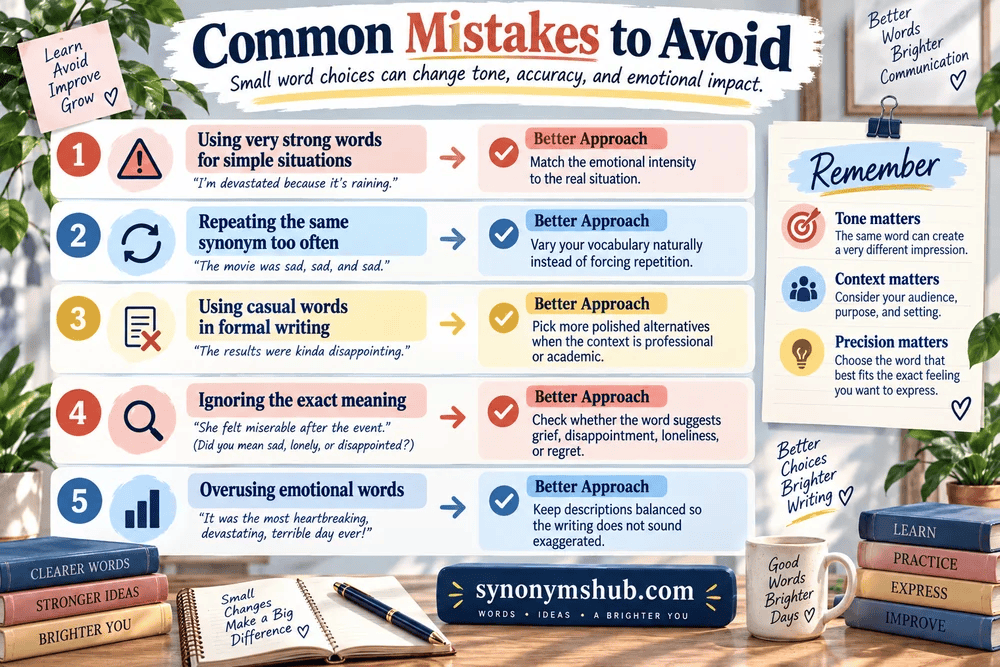
So, choosing emotional vocabulary is not about finding the strongest possible word. Overdoing sadness can indeed make a natural mode of writing sound unnatural.
| Common Mistake |
Why It Happens |
Better Approach |
| Using very intense words for mild disappointment |
Strong vocabulary sounds impressive |
Match the word to the actual emotional intensity |
| Treating every sad word as interchangeable |
Similar words can have different causes |
Check whether the emotion comes from grief, regret, failure, or loneliness |
| Using literary words in casual conversation |
Writers try to sound sophisticated |
Prefer natural options such as down, upset, or disappointed |
| Calling ordinary sadness “depression” |
The words are sometimes used casually |
Use “depressed” carefully because it can have a clinical meaning |
| Repeating one alternative too often |
Writers replace one repetitive word with another |
Vary vocabulary only when the context supports it |
| Ignoring tone |
Formal and casual alternatives sound different |
Consider the audience before choosing the word |
Conclusion
Sad happens to be one of the few cases where a simple emotion turns out to be useful. But that constraint becomes limiting when you try to characterize whether someone is disappointed, grieving, lonely, discouraged, reflective, or even emotionally inundated.
Using Synonyms for Sad wisely gives you greater control over that difference. A character can be wistful but not in devastation. An unsuccessful laborer might be dismayed, while a mourning family could be devastated. The differences enable your reader to know not just that someone is unhappy, but the kind of unhappiness they are feeling.
FAQs
What Are Some Synonyms for Sad?
Common choices include unhappy, gloomy, sorrowful, downcast, melancholy, heartbroken, disappointed, and miserable.
What Are Strong Synonyms for Sad?
For intense emotion, words such as devastated, anguished, grief-stricken, despondent, and heartbroken work well.
What Are Good Synonyms for Sad in Writing?
Melancholy, sorrowful, dejected, wistful, somber, and downhearted are useful choices, depending on tone and context.
What Are Synonyms for Sad Emotions?
Useful emotional terms include sorrow, grief, disappointment, melancholy, despair, heartbreak, and unhappiness.
What Are Synonyms for Very Sad?
Devastated, grief-stricken, anguished, heartbroken, miserable, and despondent communicate much more severe emotional pain.
What Are Other Synonyms for Sad?
Other alternatives include glum, blue, forlorn, heavyhearted, rueful, cheerless, dispirited, and woebegone.